
The Drug Bug’s Guide to Allergy Season: Finding Your Path to Relief

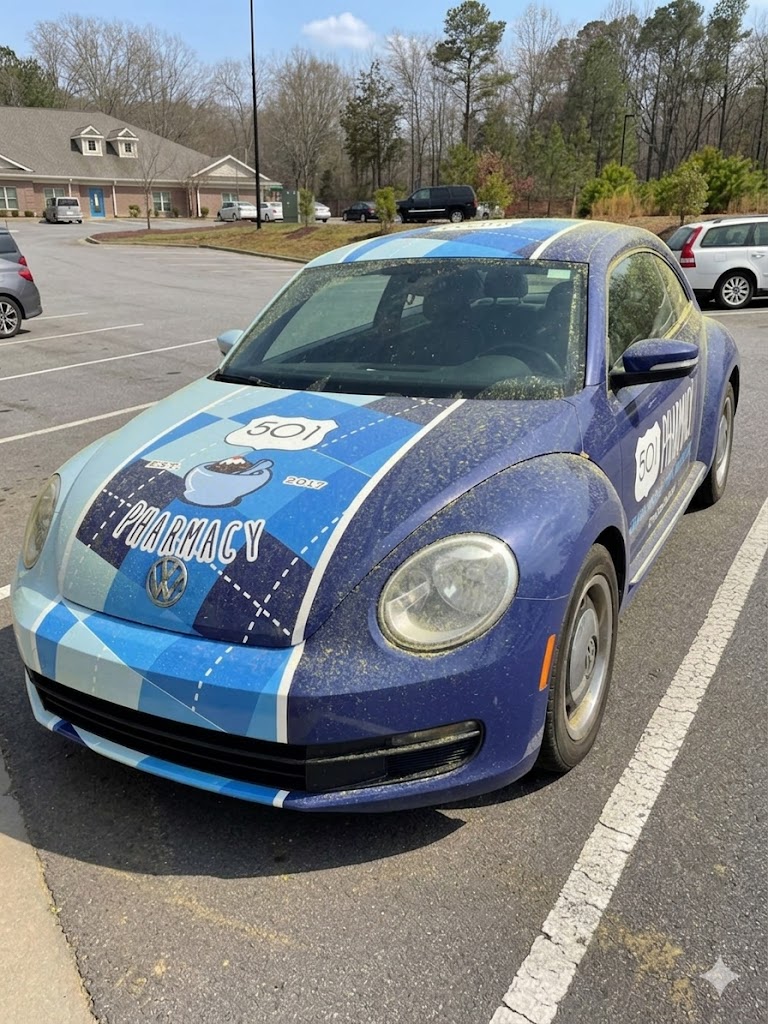
The Drug Bug isn’t the only thing that’s going to be covered in pollen soon! As the North Carolina pines start dusting everything in yellow, millions of us are bracing for the familiar cycle of sneezing, itchy eyes, and congestion.
At 501 Pharmacy, we want to make sure you spend your spring enjoying the outdoors, not hiding from them. Understanding your options, from the front of the store to the prescription counter, is the first step toward breathing easy.
First Line of Defense: Over-the-Counter (OTC) Solutions
For many, over-the-counter (OTC) medications are the perfect first stop for mild to moderate seasonal allergies. These are designed to block histamine, the chemical your body releases during an allergic reaction.
- Antihistamines: Common non-drowsy options like Loratadine, Cetirizine, and Fexofenadine are excellent for controlling sneezing, itching, and a runny nose.
- Nasal Sprays: If your main struggle is persistent congestion or sinus pressure, steroid sprays like Fluticasone or Triamcinolone reduce inflammation directly in the nasal passages. Because they work locally, they typically have fewer “whole-body” side effects.
When to Level Up: Prescription Options
Sometimes, the pollen count wins the first round, and OTC meds just don’t provide enough relief. This is when a prescription might be necessary. Prescription treatments are often stronger or target different parts of your immune response.
- Targeted Blockers: Medications like Montelukast work by blocking leukotrienes—another group of chemicals that cause allergic inflammation.
- Combination Sprays: Products like Dymista combine an antihistamine with a corticosteroid in one spray to provide a broader range of symptom control.
- Immunotherapy: For those with severe, persistent allergies, a provider might recommend allergy shots or sublingual tablets to gradually reduce your sensitivity to allergens over time.
Allergy Relief: OTC vs. Prescription At-a-Glance
| Feature | Over-the-Counter (OTC) | Prescription |
| Best For | Mild to moderate seasonal symptoms. | Severe or persistent symptoms that don’t respond to OTC. |
| Common Antihistamines | Loratadine, Cetirizine, Fexofenadine. | Stronger antihistamines or leukotriene blockers like Montelukast. |
| Nasal Sprays | Steroid sprays (Fluticasone, Triamcinolone) for congestion. | Combination sprays (like Dymista) that pair antihistamines with steroids. |
| How They Work | Often focus on blocking histamines to stop itching and sneezing. | Can target multiple inflammatory chemicals or provide broader control. |
| Long-Term Options | Immediate symptom management. | Immunotherapy (shots/tablets) to reduce sensitivity over time. |
Ask Your 501 Pharmacist!
Choosing between a dozen different boxes on a shelf can be overwhelming. Whether you need a recommendation for a non-drowsy antihistamine or you’re wondering if it’s time to call your doctor for a prescription, we are here to help.
We can help you choose the right therapy based on your specific symptoms, medical history, and lifestyle. Stop by 501 Pharmacy today or give us a call at 984-999-0501 and let’s get you ready for a clear-headed spring!